
Today's topic is the one and only - emo subculture. You will find various songs, music videos, interviews, and all the information needed to dive deep into the emo core.
 angelusmortis
¨The only reason I am in fashion is to destroy the word ‘conformity.'” – a quote by Vivienne Westwood, whom many alternative people follow. Fashion does not have any limitations or restrictions, as many different styles exist all around the world, where people are not afraid to express their individuality and uniqueness.
Alternative fashion is an umbrella term, encompassing many subcultures and communities, all of which are categorized as not fitting into the mainstream trends and norms set by society. It is deeply rooted in distinctive self-expression and leftist political views.
Based around emo music (rock music that combines emotional lyrics with a hardcore punk sound), the emo subculture began in the 1980s in Washington, D.C. Such bands as ‘Embrace’ and ‘Rites of Spring’ are seen to be pioneers of this genre – they shifted away from the aggressive, political focus of punk toward deep, confessional, and emotional lyrics, creating a scene known as ‘emotional hardcore or ‘emocore’, although the frontman himself opposed to this term.
These two bands were part of the movement called ‘Revolution Summer’, which also took place in Washington D.C. The movement focused on punk/emo bands exploring and experimenting with different musical paths. The bands themselves didn't last long, however, their ideas and whole aesthetic spread throughout the world pretty quickly.
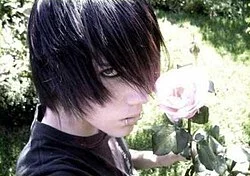
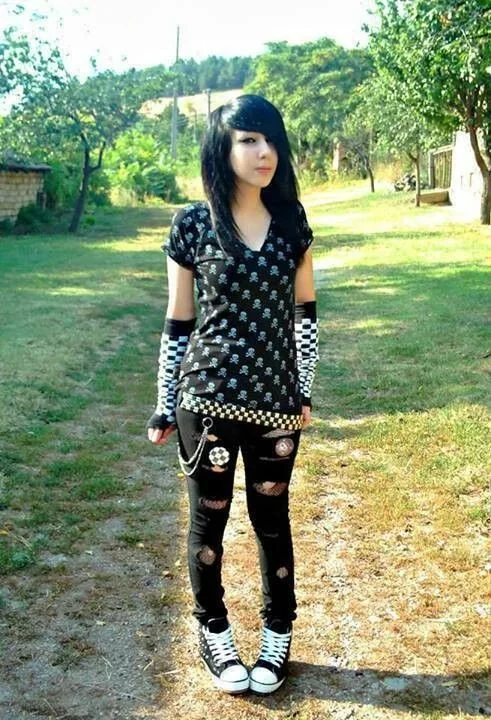
Although, what we now associate with emo is completely different. The subcultures and their style have shifted into distinctive characteristics of fashion with straight, black hair and bangs covering the eyes, or dark clothing, skinny black jeans, Vans or Converse shoes, and band T-shirts. Piercings, such as lip rings, were popular during the 2000s, as well as black eyeliner.
Bands, such as My Chemical Romance, Paramore, Tokio Hotel, or early Fall Out Boy and Panic! At the Disco, had a big impact on emo kids back in the 2000s, although not all of these bands can be considered fully ‘emo’. However, the emo ‘waves’ changed the initial punk-ish sound of emo music to a more pop-punk/pop-rock based sound.
At one point, My Chemical Romance, Fall Out Boy, and Panic! At the Disco were considered to be an ‘emo holy trinity’, as they were the most influential bands in the 2000s emo/pop-punk scene. This term represents the bands that defined the era and brought the emo genre to the mainstream media. Also, My Chemical Romance's album 'The Black Parade' became one of the most important albums in the emo music history.
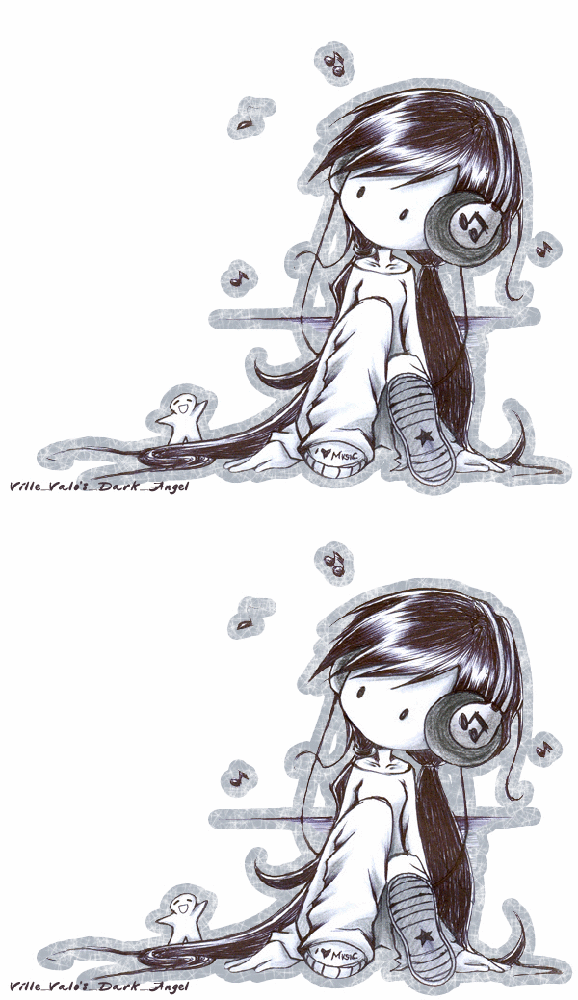
When emo became more popular in the 2000's, it was not only about music - it was a whole different subculture, full of distinctive clothing, music, and social media sites like MySpace, which brought emo to its peak.
To get to know more about emo subculture in Lithuania, local emo music and style enjoyers from Kaunas, Lithuania, Ridas and Jogailė gave our magazine an interview ^.^
Also, here is another playlist to listen to while reading the interview (you will have to open it directly via Spotify :3).
“When I was a teenager, I tried to follow other people, but now I wear what I simply find beautiful, and even though I don’t try to be ‘alternative’ specifically, it just comes out naturally” – Ridas said about his personal style, which leans into emo - skinny ripped jeans, longer hair with bangs covering his face, band T-shirts, etc.
Back in the day, being alternative and having a different style was seen as a form of rebellion and self-expression. People wanted to be authentic by showcasing their unique style, without being afraid of not following mainstream norms. Nowadays, a lot of young people do not know how to express themselves without following certain trends. A lot of trends rise in popularity because of social media like ‘TikTok’ or ‘Instagram’, where teenagers can see other people wearing all those popular items, which makes them feel the need to look the same.
Social media has taken the alternative fashion scene to new heights in recent years as well. People have started over-consuming fast fashion brands like ‘Shein’, as it is easy to find fake ‘alternative’ clothing there. But this is not authenticity, and this is not what alternative people should stand for. Alt-fashion should stand against mainstream, commercial over-consumption and fast fashion. People look alternative not because of their actual views or lifestyle, but because it is trending on social media. This loses the whole meaning of the word alternative, which is to be unique and express our individuality. “I think this ‘fake’ alternative or emo style is definitely gaining popularity, and the way they look is completely detached from what they believe in or what they listen to” Ridas agreed.
Being alternative and especially emo was not as easy 10 years ago as it is now. People in Lithuania are more used to seeing different styles all around Vilnius, Kaunas or other cities. But that wasn’t the case before. “I started dressing differently when I was 12, and I was bullied in school because of that. People were calling me a satanist, a witch, the devil. It is because they were not used to seeing different-looking people,” shared Jogailė. She expressed that nowadays, it’s mostly those ‘basic’ teenagers who call her ‘emo’ and think it is an insult. Pretty often the emo community was associated with suicide, dark looks, and depression; the stigma in society is still visible nowadays, although not that extreme.
When asked about the inspiration aspect of the style, both agreed that it was 'MySpace', ‘Tumblr’, and ‘Pinterest’ that helped them with their early looks. These are the classic platforms that ‘assisted’ many young people in finding their styles, exploring different subcultures, and searching for inspiration. „My journey started when I was 12, and I found MySpace and Tumblr. I saw punk, emo, and scene girls there, and I thought that I wanted to look like that when I grew up,“ shared Jogailė. Her rebellion started with dressing black, cutting her bangs to look more ‘emo’, wearing flannels, a My Chemical Romance shirt, and ripped jeans. This was a core memory of most emo youth in Lithuania. 10 years ago, wearing flannels and skinny black jeans (especially ripped) was as ‘emo’ as it could get. I, myself, at that time had a similar choice in fashion, and I thought, “Whoa, I look so cool“.
Younger people in Lithuania nowadays have more accessible tools to express themselves to their fullest. Makeup, clothing, shoes, and accessories are available online and in many shops around the city. Thrifting has been a big thing in the emo community to find original and authentic clothing pieces; however, in recent years, it has become more and more expensive. The couple has agreed that thrifting in Lithuania has become almost like a privilege. Once upon a time, we could find good alternative fashion shirts for one euro; however, now, a simple black shirt can cost 10 euros, almost the same price as in fashion stores. Times have changed, as thrifting has become almost a trend by itself too. However, what makes alternative people special is that they can simply DIY their accessories and clothing; it is a fun way to create their own unique piece of clothing, a one-of-a-kind item.
Walking through the streets of Kaunas, we meet individuals belonging under the alternative umbrella: those with Lolita fashion, goths, punks, emo, grunge, and many other subcultures. It is a significant change, as alternative fashion has emerged; we often see more and more differently looking people, who are fighting the beauty standards and building a new community in modern Lithuania. By looking the way they are, they are creating a new standard that being unique is perfectly fine and should be normalized.
Jogailė and Ridas’ friend group consists mostly of alternative people, specifically leaning into the emo subculture. “All my friends are alternative, whether softer alternative style, or more edgy. We were all in art school together, so it is only natural that artsy people have a more unique style,” explained Jogailė about her friends. Although both Ridas and Jogailė agree that they do not care whether the person has a more unique fashion style, as long as they are a good person, personality, and their mindset always matter more.
“It depends on what kind of mindset they have, but if they are very homophobic or transphobic, and racist, it would be simply hard to communicate with them. They are empty individuals. People like that do not have anything good to say; it is just not comfortable to talk with them,” she added. Subculture-specific values are important in the alternative people community, and following a more liberal ideology is deeply rooted in it (e.g., goth and punk subcultures).
Yet again, nowadays, since it became trendy to be alternative, you never know if people actually follow a leftist-leaning and more liberal worldview, or perhaps they are the complete opposite of that? Who knows.
While people believe that the capital of fashion is Paris, Milan, New York, or London, as they have the biggest impact on international fashion, what about our little Baltic states? To me, Lithuania is a strong candidate to be the capital of alternative fashion in the Baltics.
Not only is alternative fashion at its peak, but we also have other styles like minimalist, boho, or classy vintage. Of course, let us not forget our classic ‘marozai’ (can be known as slavs as well) subculture, who are a big part of making Lithuania the way it is today with their full ADIDAS outfits (and one or two slurs against alternative youth).
We have everything here, and I believe the most crucial part is that people are growing to be more confident in exploring different fashions, even if it’s certain trends on social media. It is a way to explore our style and find out what we really like, how we want to dress, and present ourselves. If you want to find out all about Lithuania's fashion, I welcome everyone to visit our little, fashionable, and trendy country.
If you liked this article, I recommend checking this podcast about Lithuania's emo music scene here and here ^^
Although emo subculture nowadays is not as popular as it used to be in the 2000's, it's still very much alive (BTW, the phrase 'Very Much Alive' got popularized by Gerard Way, who wrote the words on his neck in Sharpie during their 2007 tour).
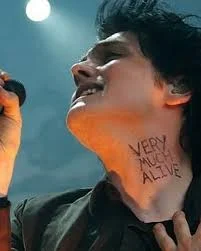
People are experimenting with their styles, listening to the same old bands that were popular when emo was at its peak, especially with the My Chemical Romance reunion tour.
It's a nostalgic subculture, which created a community of young and unique individuals. who were not afraid to express themselves differently, more emotionally and intensely.
So, the question remains, was it just a phase, or simply a lifestyle?